TERMS AND CONDITIONS.
We prove we are human to machines.
We ask machines to make us sound more human.
We soften emails, acknowledge notifications, confirm our intentions, accept cookies,
wait for approval, follow up, stay available.
A language designed to make communication faster and smoother has gradually become a language of behaviour.
We learn to be clear, responsive, agreeable, efficient. Frictionless.
At some point, the interface stops being something we use and becomes something we perform.
Terms and Conditions begins inside this contradiction.
The titles are borrowed from the language that surrounds contemporary life:
Prove You’re Not a Robot, Make It Sound More Human, Just a Quick Follow Up,
I Hope I’m Not Bothering, Thanks in advance.
Phrases so familiar they have almost disappeared from view.
Taken out of their usual context, they become less reassuring.
They begin to expose the small systems of permission, verification, compliance and
self-correction that structure everyday behaviour.
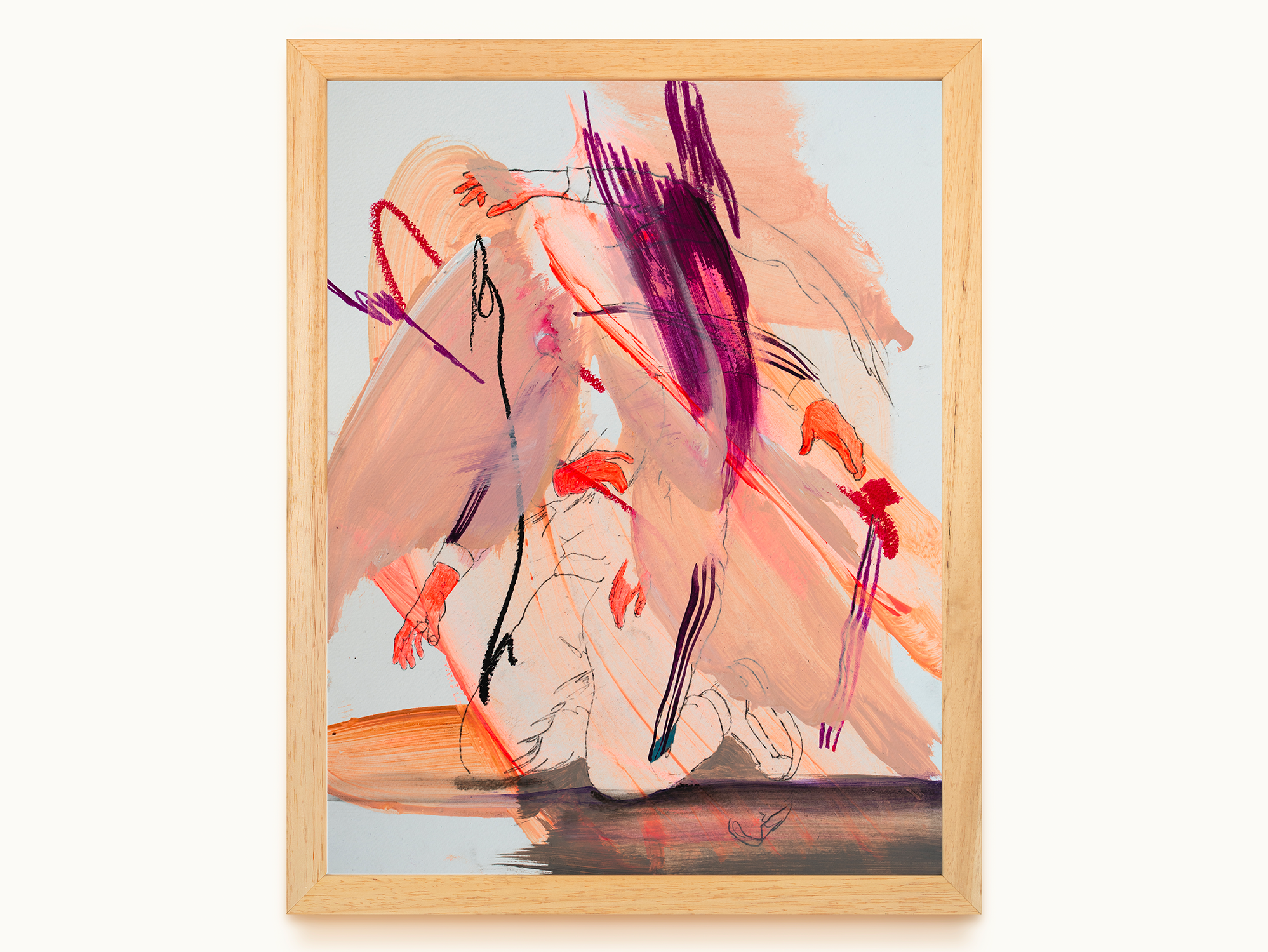
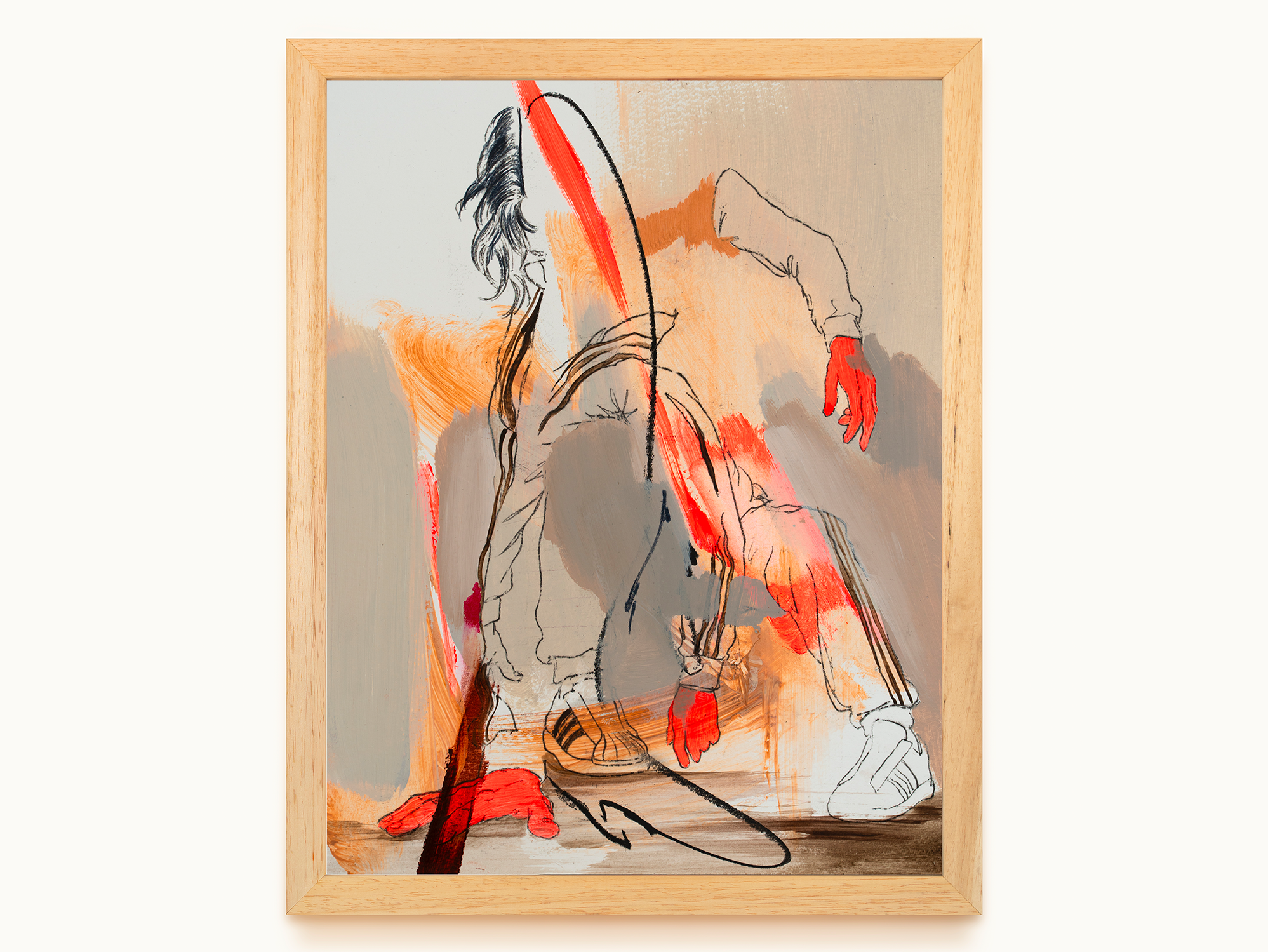
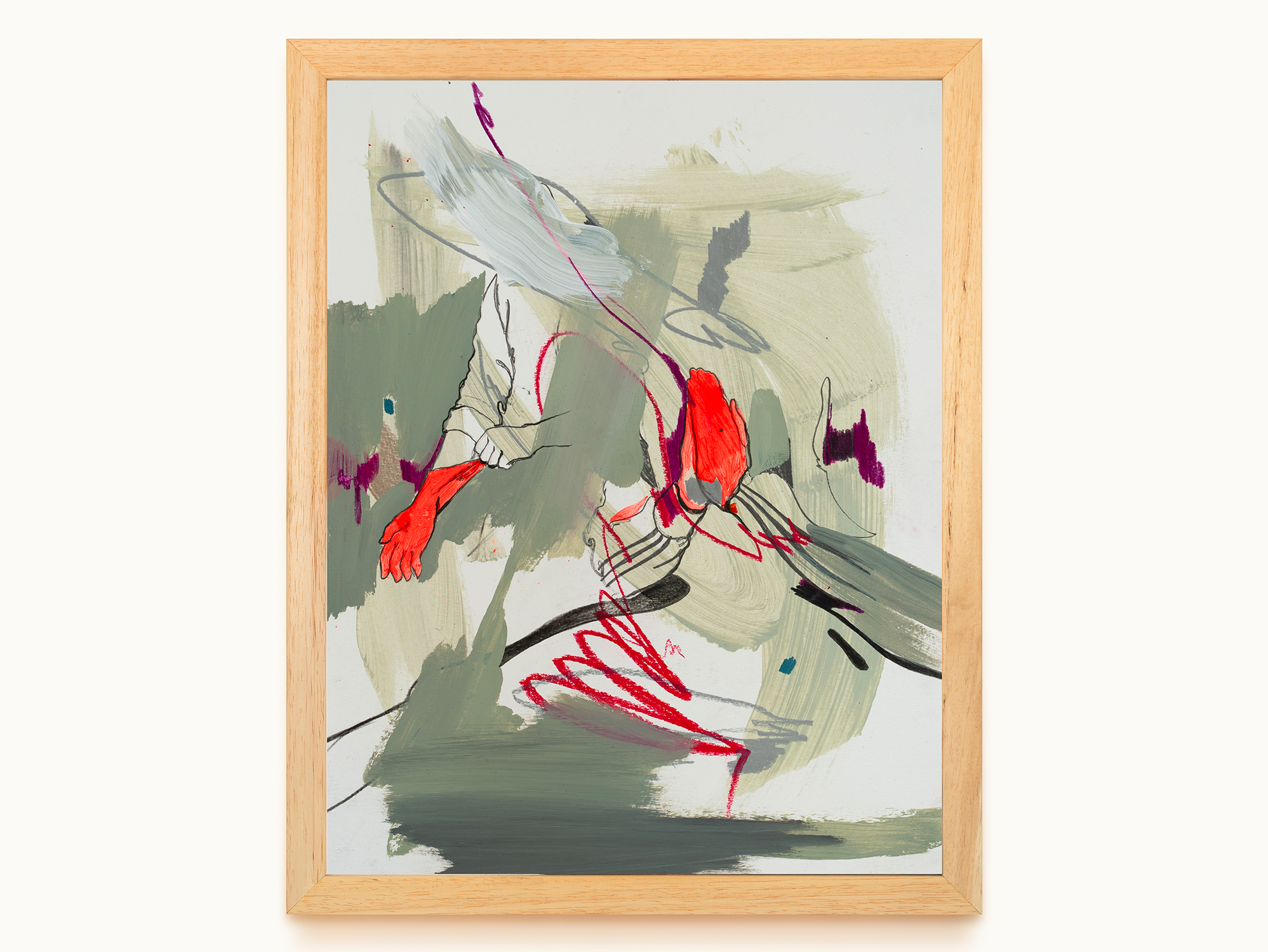
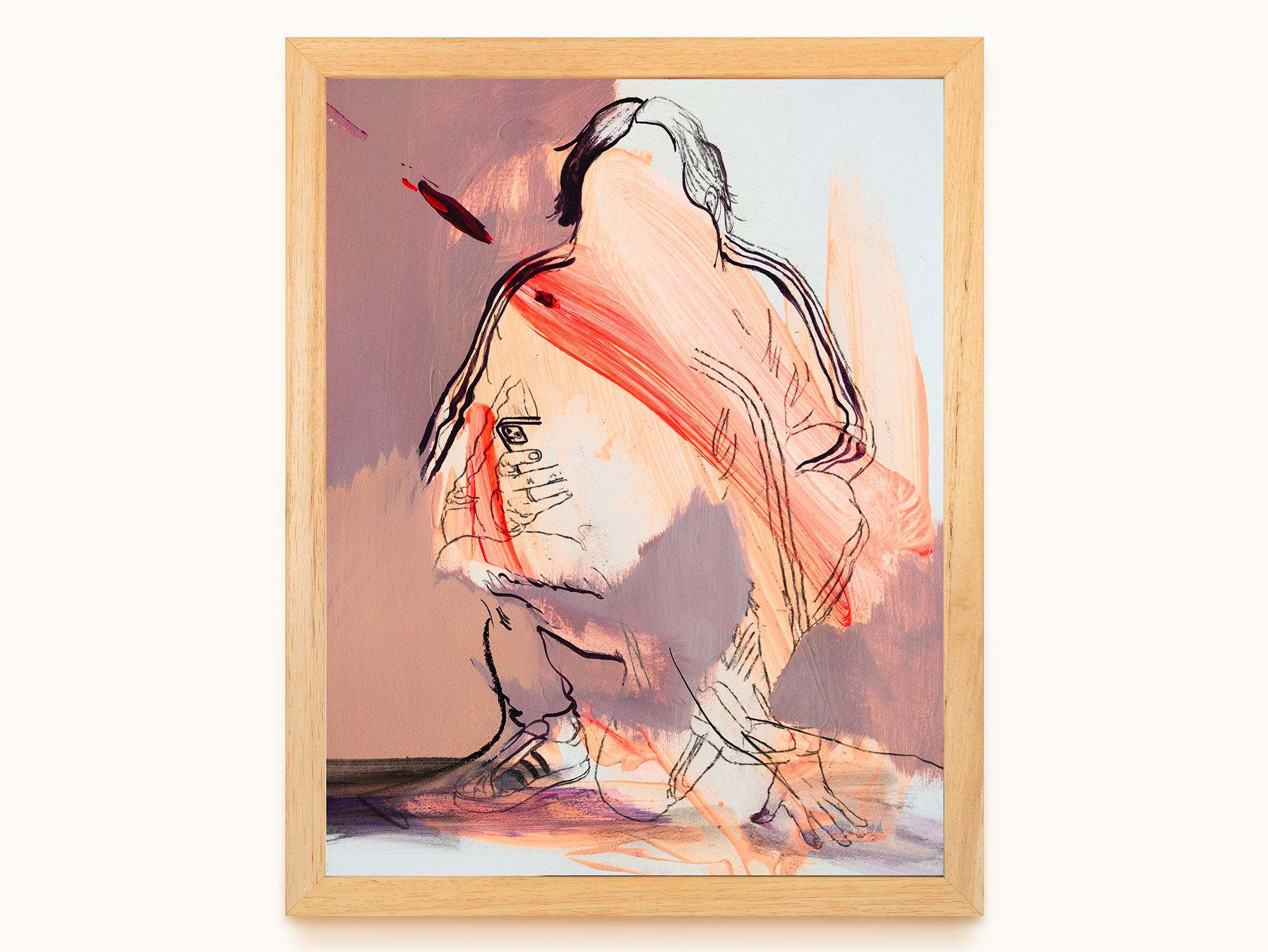
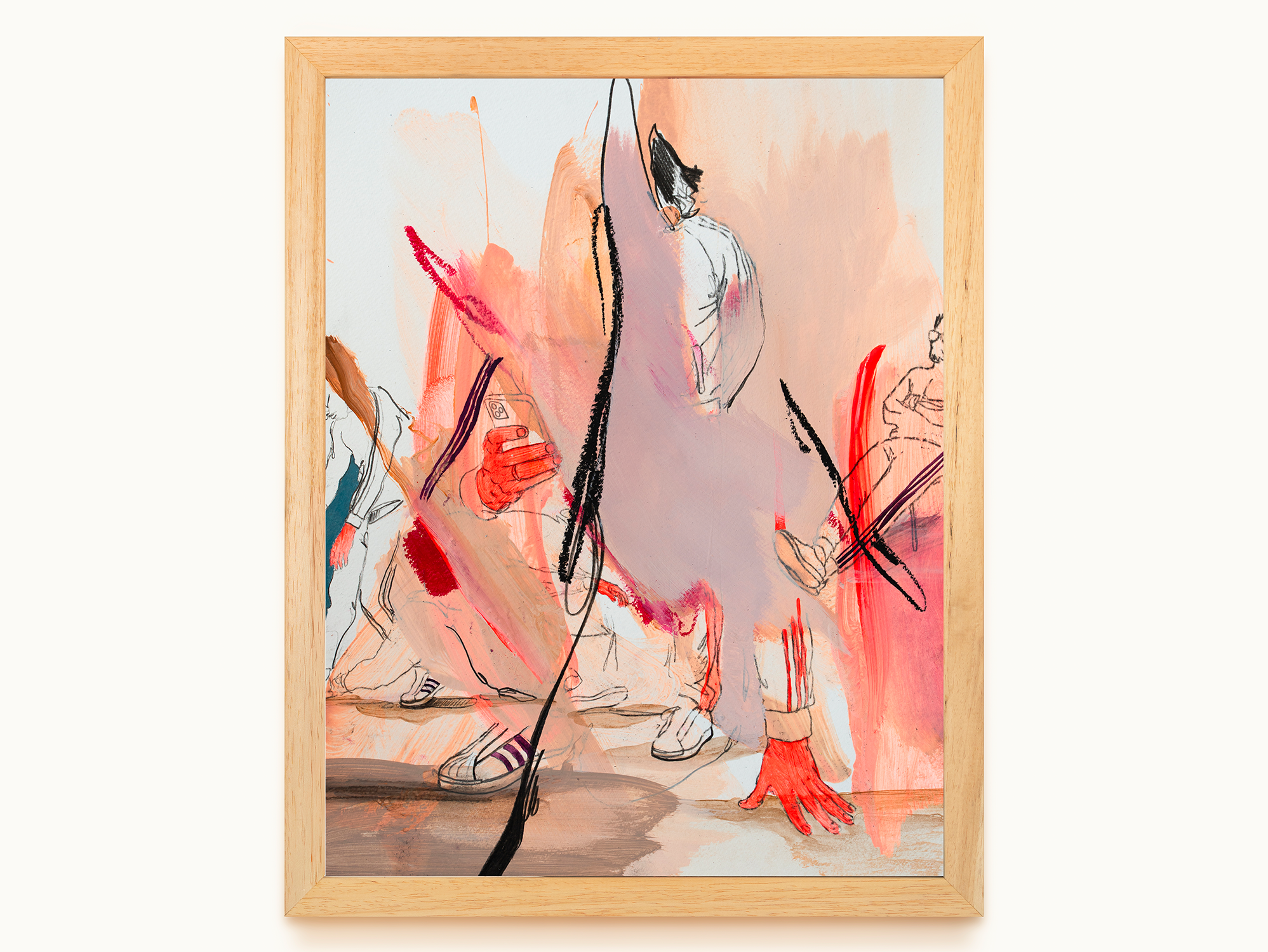
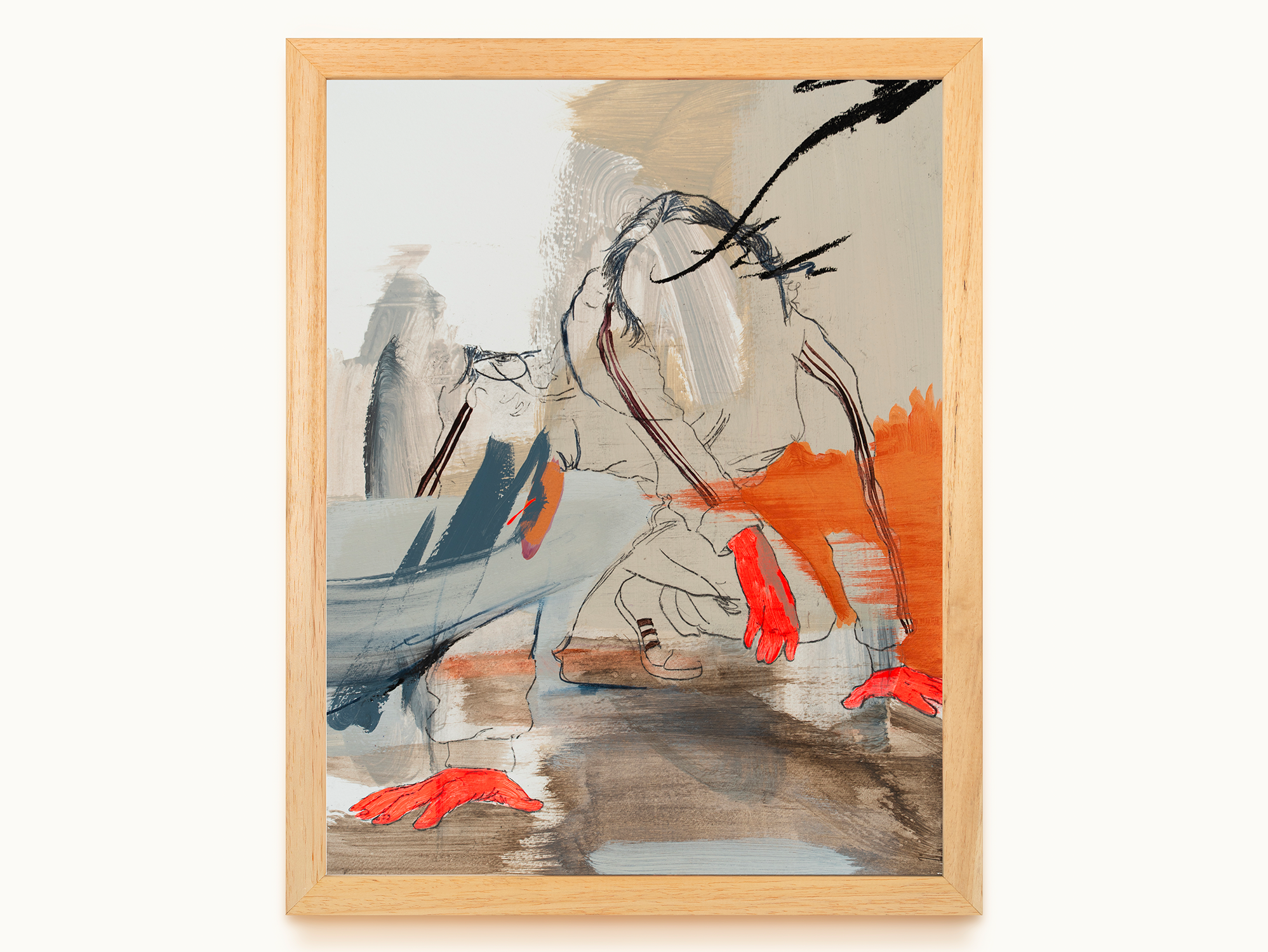
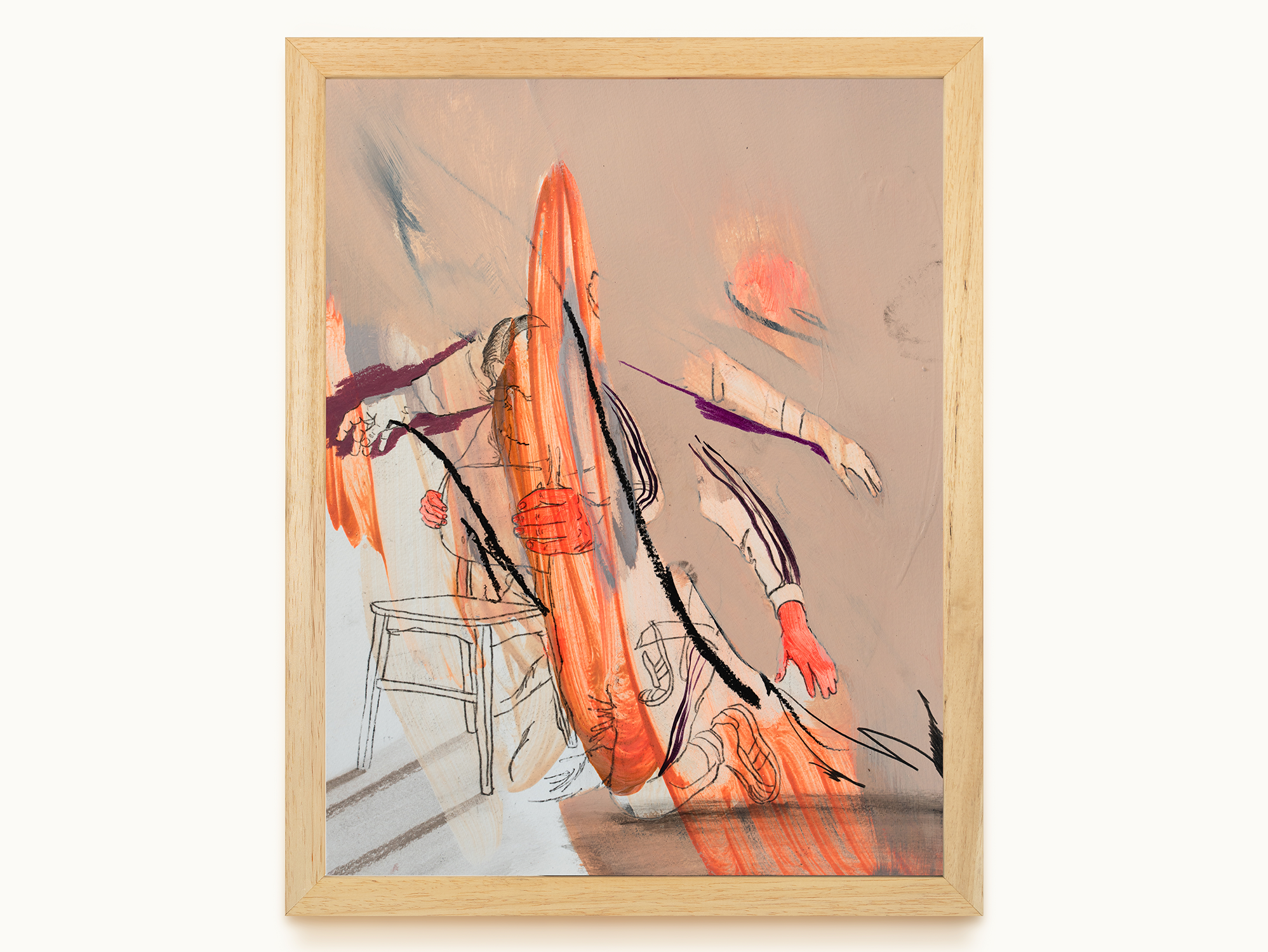
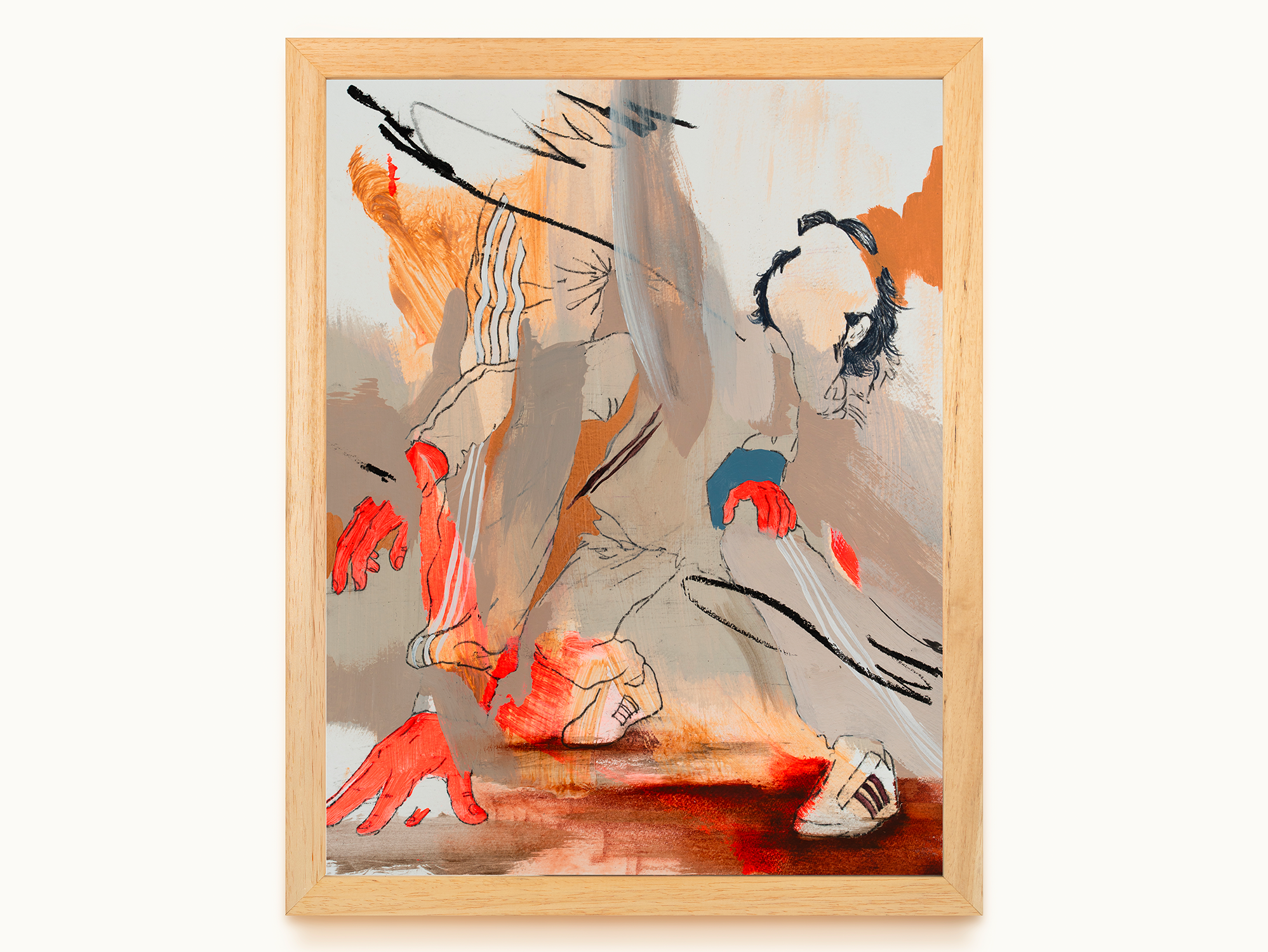
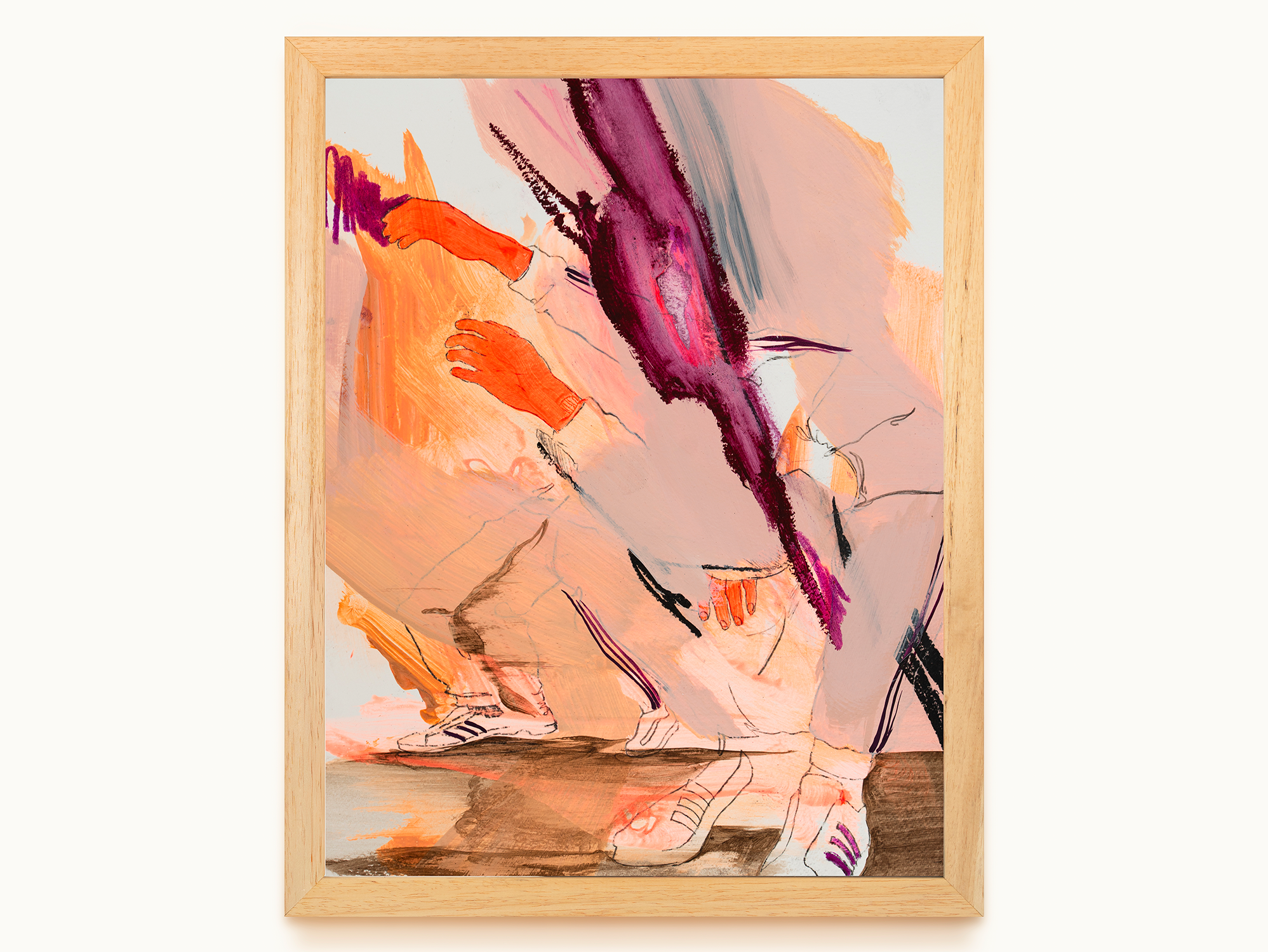
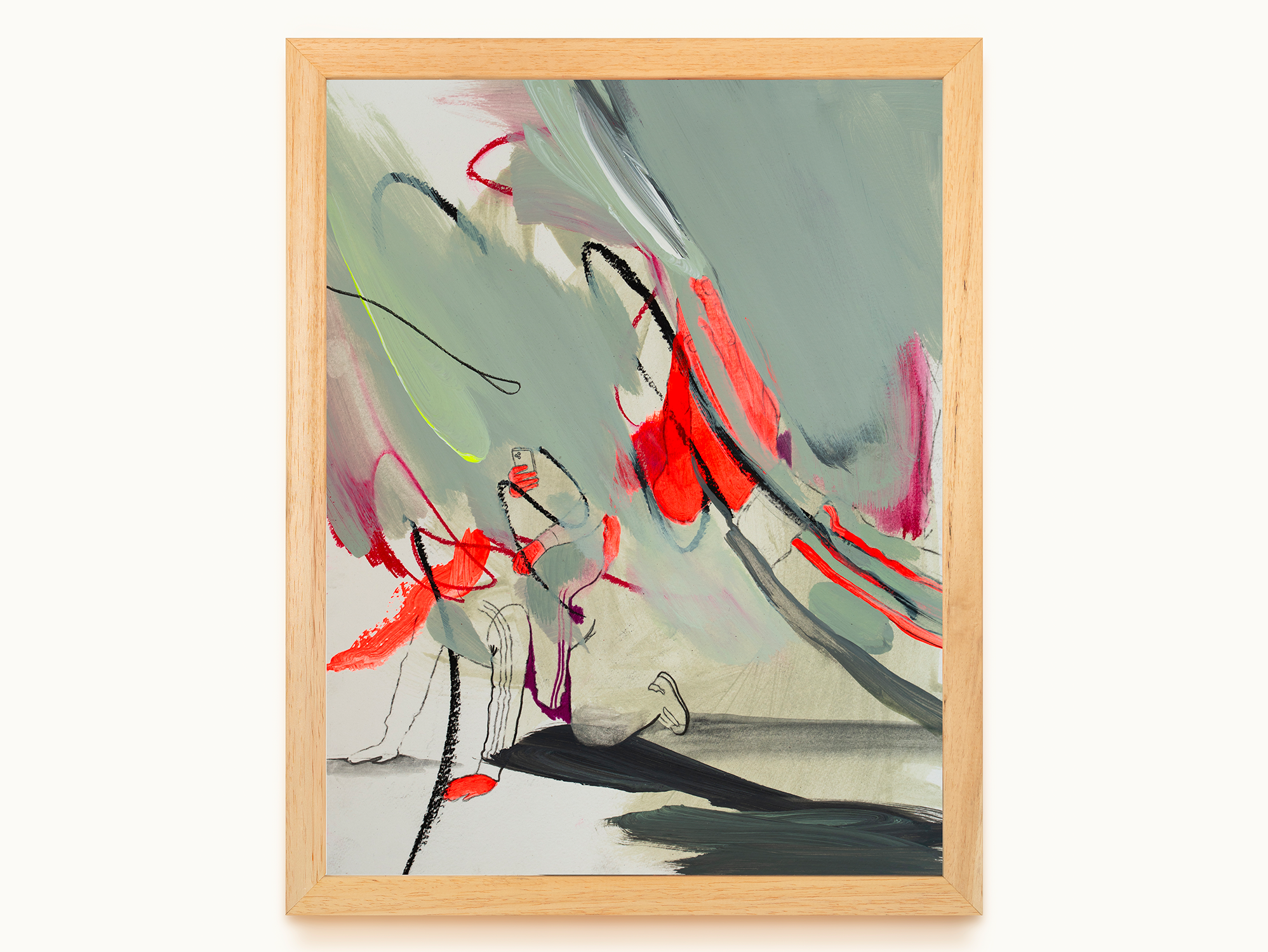
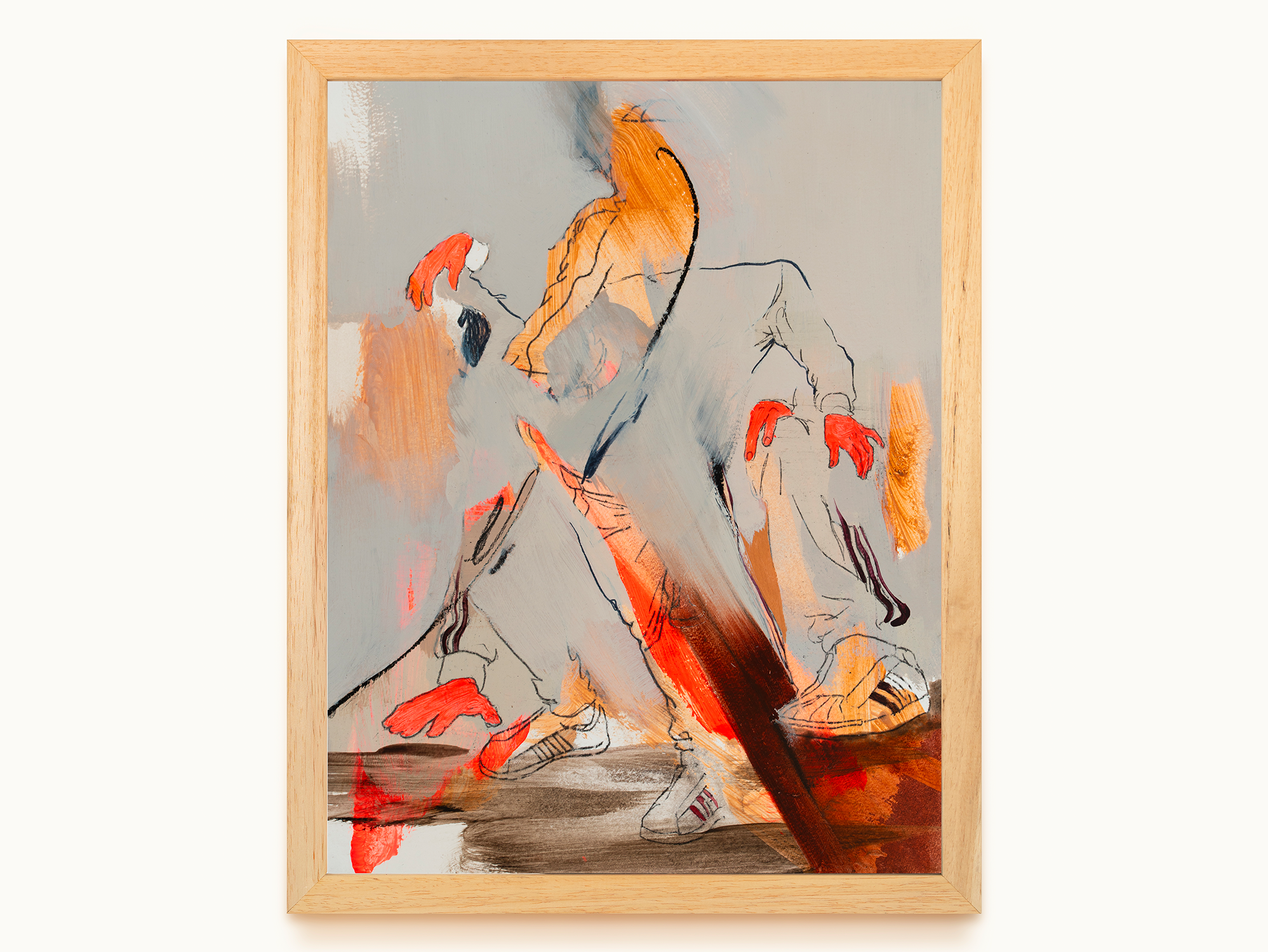
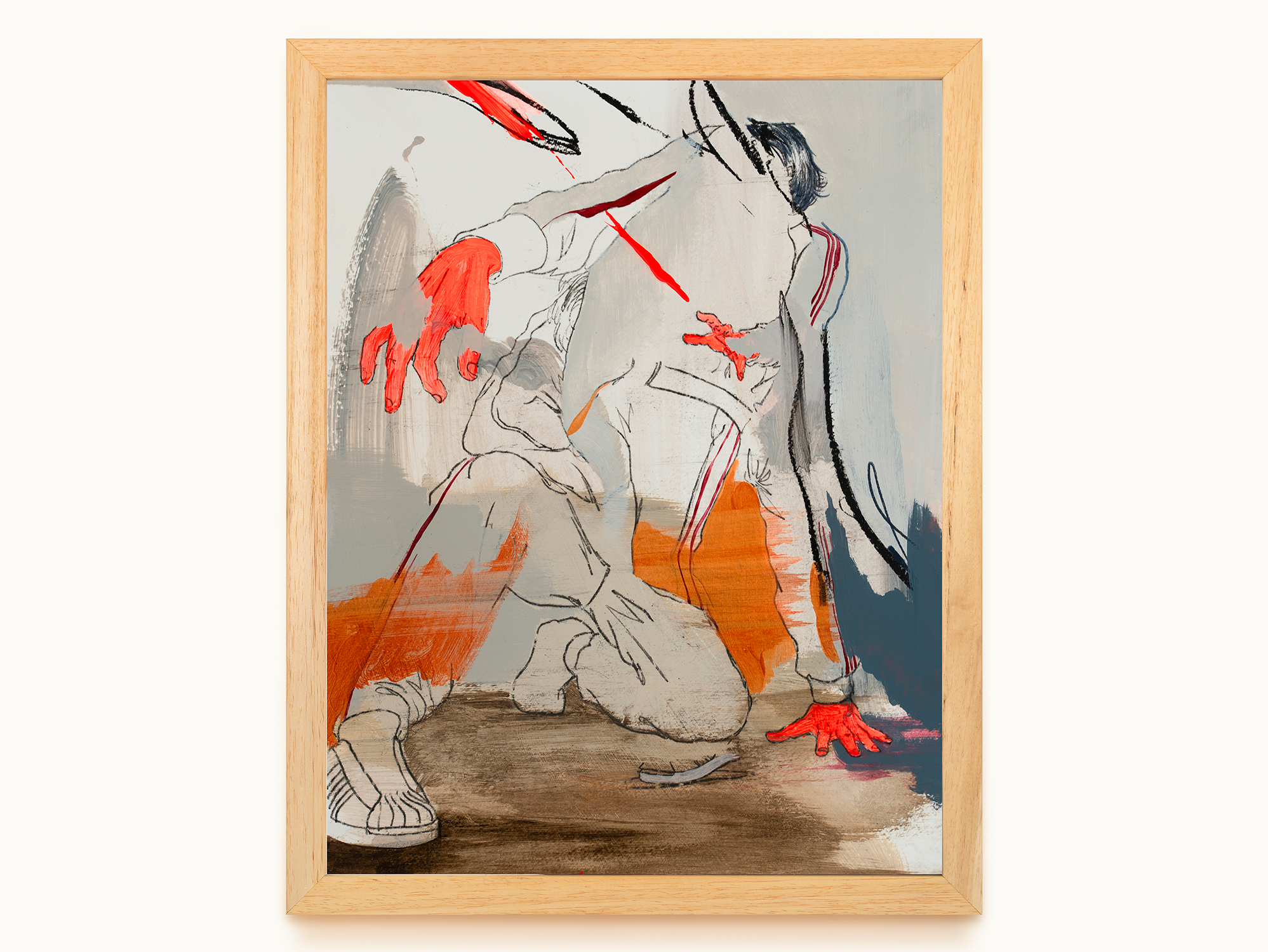
Bodies appear unstable, interrupted, repeated, partially erased.
A figure may occupy several positions at once;
gestures survive after the body around them has disappeared.
Drawing, colour and painted passages collide without fully resolving into a single image.
Not a body depicted as a victim of technology, but a body continuously negotiating the conditions of being present: adjusting, responding, waiting, performing, trying to remain legible.
The same tension operates within the paintings themselves.
Contemporary systems demand clarity, confirmation and completion.
The works move in the opposite direction.
They retain contradiction, error, residue and uncertainty.
They resist the stable image in the same way the figures resist settling into a stable form.